
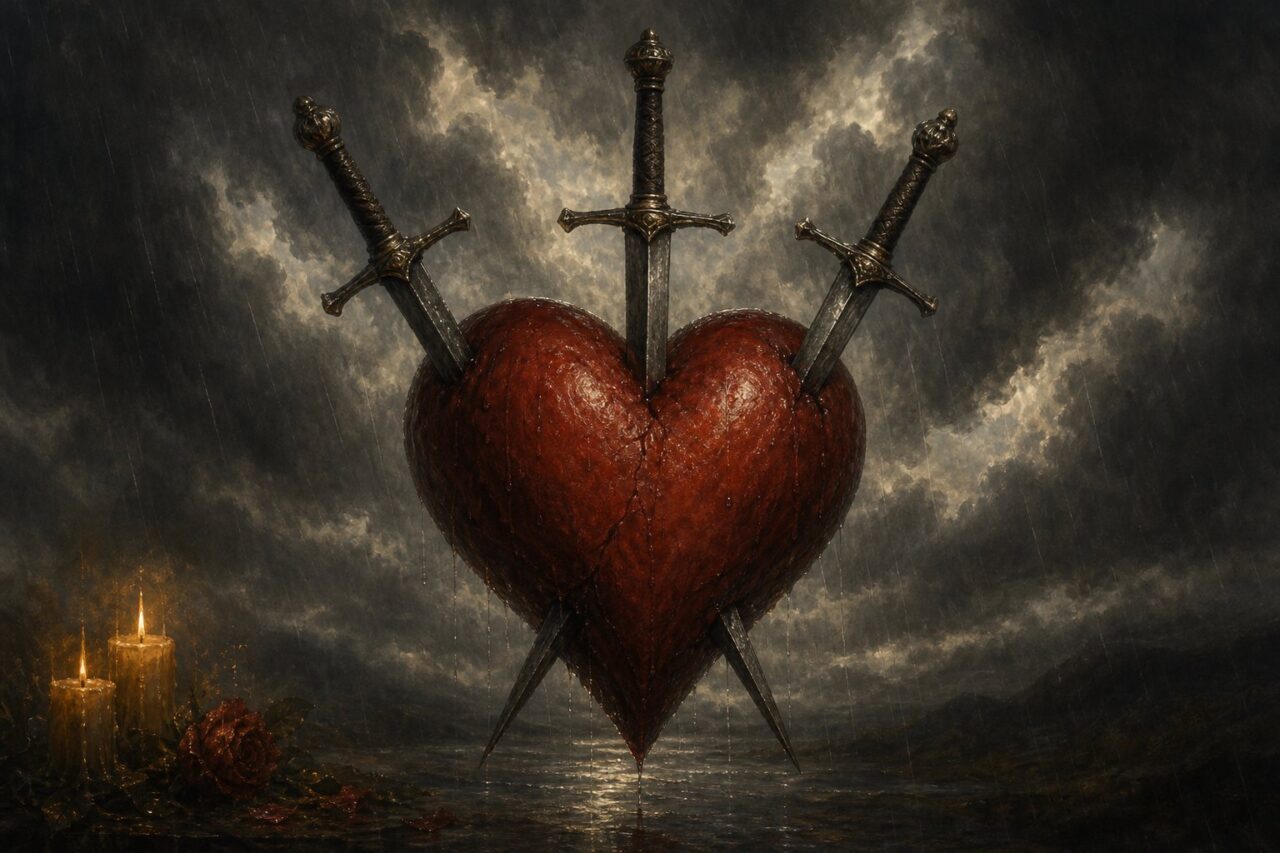
The Three of Swords is the tarot card that names the hurt you may have been trying to talk around. It points to heartbreak, grief, emotional pain, and sorrow, especially when the mind keeps replaying what the heart is still trying to absorb. This card does not soften the truth, but it can make the truth clear enough to work with.
As a Minor Arcana card in the suit of Swords, the Three of Swords often shows up when words, decisions, silence, or hard information have cut deeply. It can describe a breakup, a betrayal, a painful conversation, a disappointment, or the moment you finally admit something has wounded you. The message is not that you are broken; it is that pain needs to be acknowledged before it can begin to move.
Quick guide to the Three of Swords
| Arcana | Minor Arcana, suit of Swords |
|---|---|
| Element | Air |
| Astrology | Saturn in Libra |
| Upright keywords | Heartbreak, grief, emotional pain, sorrow |
| Reversed keywords | Recovery, forgiveness, releasing pain |
| Yes or no | No |
What the Three of Swords card shows
In the Rider-Waite-Smith image, a red heart is pierced by three swords. The card shows this heart and the three swords clearly and directly.
Behind the heart and swords is a grey sky filled with storm clouds. The sky creates the card’s stark, sorrowful atmosphere.
The image also shows rain falling from the storm clouds. The rain completes the scene of heartbreak, grief, emotional pain, and sorrow.
Three of Swords upright: the core message
Upright, the Three of Swords brings heartbreak into focus. You may be dealing with a breakup, an argument that exposed deeper problems, a friendship that no longer feels safe, or news that changes how you see someone. The card often appears when the painful part is not only what happened, but what you now know and cannot unknow.
In real life, this can look like reading a message that confirms your fear, hearing a truth you were not ready for, or realizing that an agreement, promise, or plan has fallen apart. It can also show the grief of being excluded, misunderstood, or let down by someone you trusted. The card asks you not to rush into acting strong when your heart is clearly asking for care.
The upright Three of Swords is not here to punish you with sorrow. It asks for honesty, clean communication, and space to feel what has happened without making it worse through denial or harsh self-talk. If you need to cry, write the unsent letter, cancel plans, or ask for support, those choices can be part of your strength rather than evidence of weakness.
Three of Swords reversed: what changes
Reversed, the Three of Swords begins to shift from raw heartbreak toward recovery. The pain may still be present, but it is no longer defining every thought or decision. You may be ready to stop reopening the same wound through checking, rereading, blaming yourself, or replaying the conversation that hurt you.
This reversal often brings forgiveness, but not the kind that pretends nothing happened. It can mean forgiving yourself for not seeing the signs sooner, forgiving another person without inviting them back in, or releasing the need for a perfect apology before you start healing. The focus is on loosening pain’s grip so your future is not built around one sharp moment.
Sometimes the reversed Three of Swords shows that grief has been buried too neatly. You may be saying you are fine while your body, mood, or reactions tell another story. If old sorrow is surfacing, treat it as a signal that your heart is ready for a more honest kind of release, not as proof that you have failed to move on.
The fear this card brings
The most common misconception about the Three of Swords is that it only predicts disaster. In real readings, it more often confirms what you already feel but may be afraid to say out loud. The card can be painful, yet it can also be validating because it tells you that your hurt is not imaginary or excessive.
A useful question with this card is, What truth am I trying not to feel? For example, in a three-card reading with the Two of Cups, Three of Swords, and Temperance, the story might be: there was genuine connection, something has caused real pain, and healing will require patience and careful repair. That example does not promise reunion, but it does show that the wound has a path if both honesty and time are respected.
What the Three of Swords says about your love life
In a relationship: The Three of Swords can point to a painful conversation, a breach of trust, a separation, or the ache of feeling emotionally alone while still being together. It may show the moment when polite avoidance no longer works because something has pierced the center of the bond. If both people are willing to speak clearly and listen without defending every wound, the card can mark a hard truth that needs air.
If you are single: This card often reflects lingering heartbreak from a past connection. You may want love, but part of you may still be bracing for rejection, betrayal, or disappointment. Give yourself permission to date slowly, keep standards clear, and avoid using a new person as a bandage for pain that still needs gentle attention.
Reversed in love: Reversed, the Three of Swords suggests recovery after romantic pain. You may be ready to forgive, have a healing conversation, stop comparing everyone to someone who hurt you, or release a relationship that has lived too long in your mind. In an existing partnership, it can show a chance to repair emotional damage, but repair requires changed behavior, not only regret.
Three of Swords for work and finances
At work: The Three of Swords can show disappointment in a professional setting, such as a rejection, a difficult review, a broken promise, or conflict with a coworker. You may feel personally hurt by something that is being framed as business. Take the emotional impact seriously, while also separating what you feel from what practical step needs to happen next.
With money: This card can point to financial stress connected to painful news, an unexpected bill, a shared-money conflict, or the sadness of realizing a plan is not possible right now. It does not guarantee loss, but it does advise you to face the numbers clearly. Avoid spending from grief, panic, or the desire to prove you are fine.
Reversed: Reversed in career or money readings, the Three of Swords suggests recovery after a setback. You may be rebuilding confidence after criticism, renegotiating a strained financial arrangement, or accepting that one opportunity was not the only path. Practical repair starts with clear records, calmer conversations, and choices that protect your peace as well as your resources.
Three of Swords and your well-being
For energy and well-being, the Three of Swords can describe the weight of emotional stress. Grief, conflict, and disappointment can affect your rest, focus, appetite, or motivation, even when you are trying to carry on as usual. This is not a diagnosis, and it should not replace medical or mental health care, but it does suggest that your emotional life deserves real attention.
The card encourages gentle support rather than pushing through pain as if nothing happened. You might benefit from quiet time, honest journaling, trusted conversation, breathing practices, or professional support if the sorrow feels too heavy to hold alone. Think of recovery as making room for your heart to settle, not forcing yourself to be over it by a deadline.
What the Three of Swords reveals about feelings
As someone’s feelings for you, the Three of Swords usually shows hurt, sadness, or emotional conflict. This person may feel wounded by what happened between you, afraid of being hurt again, or caught between caring and protecting themselves. Their feelings may be real, but they are filtered through pain, which means their behavior could be distant, guarded, or inconsistent until the wound is addressed.
Yes or no: how the Three of Swords answers
The Three of Swords gives a No as a yes-or-no answer because it points to sorrow, conflict, or a painful truth that blocks the desired outcome right now. Upright, it advises against forcing a situation that is already hurting you or ignoring evidence that something is not healthy. Reversed, the answer still leans No, but with a softer message: healing is possible, yet the timing may be for release, repair, or forgiveness rather than getting exactly what you asked for.
For every card at a glance, see our yes or no tarot guide.
How the Three of Swords combines with other cards
- Three of Swords + The Lovers: This pairing often highlights a painful choice in love or a relationship tested by honesty. Attraction may be present, but values, trust, or timing must be faced directly.
- Three of Swords + The Star: The Star softens the Three of Swords by bringing hope after heartbreak. It suggests emotional recovery, renewed faith, and the slow return of peace.
- Three of Swords + Five of Cups: Together, these cards emphasize grief, regret, and focus on what has been lost. They ask you to mourn honestly without letting sorrow erase every remaining source of support.
- Three of Swords + Ten of Swords: This combination can mark a painful ending that cannot be ignored. It may feel final, but it also shows that the worst part is becoming visible instead of hidden.
- Three of Swords + Temperance: Temperance brings patience and emotional regulation to the Three of Swords. Healing may come through moderation, time, and careful repair rather than dramatic action.
How to work with this card's energy
- Name the real hurt. Be specific about what wounded you: the lie, the silence, the rejection, the broken promise, or the loss. Clear naming keeps pain from spreading into every part of your life.
- Do not rush forgiveness. Forgiveness is not a performance and it is not owed on someone else’s schedule. Let your heart catch up with the truth before you decide what repair is possible.
- Protect your tender places. If contact, checking, or explaining yourself keeps reopening the wound, create a boundary. Space can be a healing tool, not a punishment.
- Let support reach you. Pain often tells you to isolate, but this card benefits from safe witnesses. Choose one steady person, counselor, or support space where you can speak without being rushed.
Three of Swords and astrology
The Three of Swords is linked to the element of Air, so its pain often moves through thoughts, words, decisions, and perception. It is associated with Saturn in Libra, a combination that can bring hard lessons in fairness, commitment, boundaries, and the consequences of choices made within relationships. This is the ache of truth meeting the need for balance, especially when harmony can no longer be maintained by avoiding what hurts.
Keep exploring: browse all tarot card meanings, check your daily horoscope for the astrological mood of the day, or see the key dates of the year in your 2027 horoscope.