
The Emperor is the card that walks into the room, sets the meeting time, checks the lock on the door, and asks what the plan is. As Major Arcana IV, it speaks to authority, structure, stability, leadership, and protection. When it appears, your reading is usually pointing to boundaries, responsibility, and the kind of order that helps life feel safe enough to grow. This is not a soft card, but it can be a deeply reassuring one.
At its best, The Emperor shows you where you are ready to take command of your choices instead of reacting to everyone else. It can describe a leader, a parent figure, a boss, a partner with a strong presence, or the part of you that knows how to make firm decisions. The card asks for maturity, not harshness; consistency, not control for its own sake. You are being invited to build something that can hold weight.
The Emperor at a glance
| Arcana | Major Arcana, card IV |
|---|---|
| Element | Fire |
| Astrology | Aries |
| Upright keywords | Authority, structure, stability, leadership, protection |
| Reversed keywords | Rigidity, domination, lack of discipline, abuse of power |
| Yes or no | Yes |
What the Emperor card shows
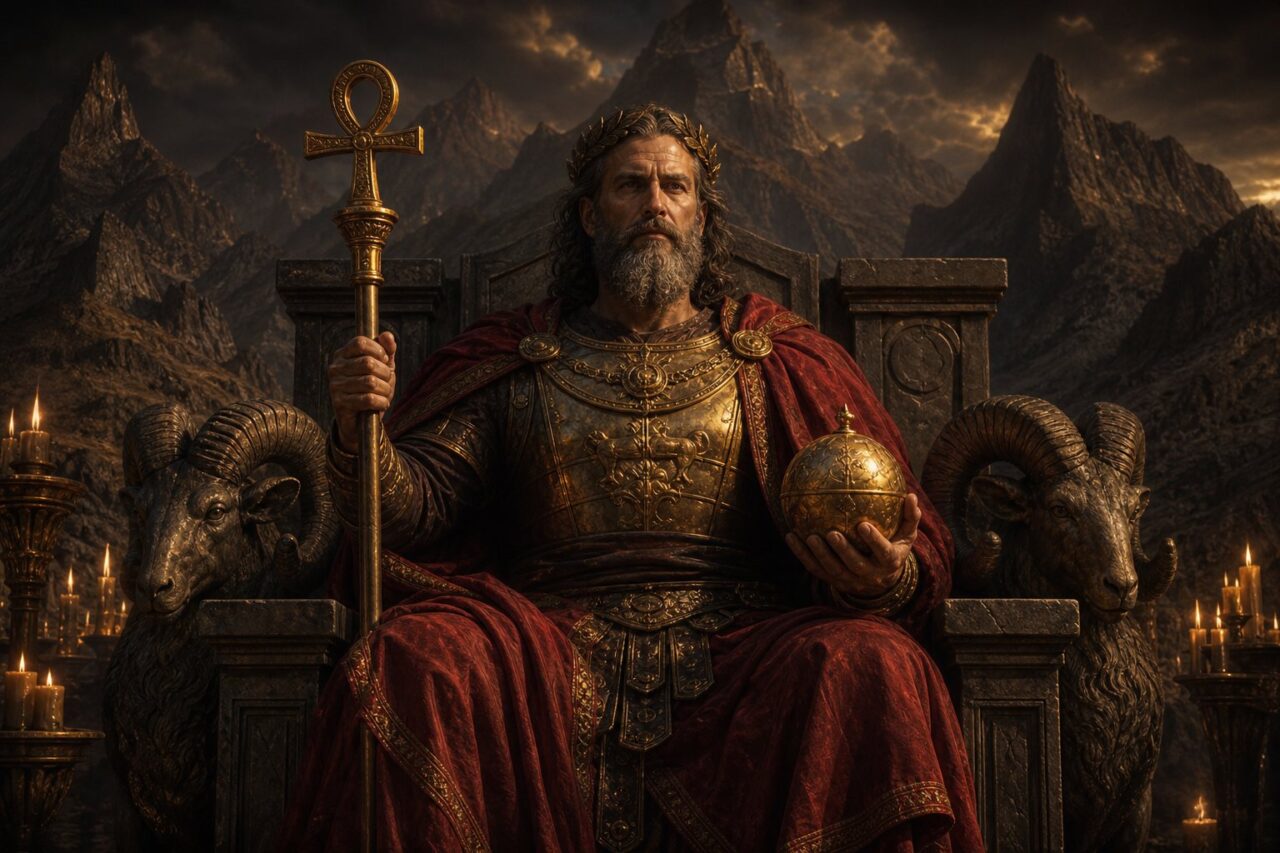
In the Rider-Waite-Smith image, a stern, bearded ruler sits on a stone throne decorated with ram heads. He holds an ankh-shaped scepter and an orb. He wears armor under a red robe, and barren mountains rise behind him.
The ruler is seated on the stone throne decorated with ram heads, holding the ankh-shaped scepter and the orb. His armor is visible under the red robe. The barren mountains stand behind him.
The image shows only these details: a stern, bearded ruler on a stone throne decorated with ram heads; an ankh-shaped scepter and an orb in his hands; armor under a red robe; and barren mountains behind him.
The Emperor upright: the core message
Upright, The Emperor is a sign that structure will help you more than improvising right now. If your schedule, relationship, business plan, or home life has become scattered, this card tells you to create rules you can actually follow. You may need a budget, a written agreement, a clear deadline, or a simple routine that removes daily confusion. The Emperor does not ask you to become cold; he asks you to stop leaving serious matters to chance.
In real life, this card can show up when you are stepping into leadership. You might be managing a team, caring for family members, organizing a move, leading a project, or making a decision that affects other people. The upright Emperor says you can handle the responsibility if you stay fair, consistent, and direct. People may be looking to you for steadiness, and your calm confidence can give them a sense of safety.
The Emperor can also describe protection and stable support. This may be a person who shows love through practical action, such as fixing what is broken, planning ahead, or making sure everyone has what they need. It can also be your own inner authority becoming stronger after a period of uncertainty. When this card is upright, ask yourself where stronger boundaries would bring peace instead of pressure.
When the Emperor appears reversed
Reversed, The Emperor often shows structure becoming too tight or authority being used poorly. A rule that once created safety may now feel like a cage, or someone may be insisting on control because they are afraid of losing influence. This card can point to rigidity, domination, lack of discipline, or abuse of power. The question is whether order is serving the situation, or whether it has become a way to avoid listening.
In everyday situations, reversed Emperor energy can look like micromanaging, refusing to compromise, or expecting others to obey without explanation. It can also show up internally as being too hard on yourself, treating every mistake like a failure, or believing you must stay in control at all times. On the other side, it may describe a lack of discipline, where plans are made but not followed through. Either extreme leaves you feeling unsupported because healthy authority is missing.
This reversal asks you to examine your relationship with power. Are you giving yours away to someone who does not respect it, or are you gripping too tightly because vulnerability feels unsafe? You may need to reset boundaries, question an unfair system, or bring more accountability into your own choices. The goal is not rebellion for its own sake, but a better balance between strength and respect.
The myth of cold control
One misconception about The Emperor is that it always means a cold, controlling person. In real readings, it is just as often the card of someone trying to create safety after a period of disorder. The Emperor may not be soft in style, but his deeper purpose is protection, stability, and accountability. The question is whether that structure supports life or squeezes it too tightly.
For example, imagine a three-card reading with Seven of Cups, The Emperor, and Ace of Pentacles. The Seven of Cups shows too many options and not enough clarity, The Emperor advises choosing a practical plan and setting limits, and the Ace of Pentacles shows a real opportunity that can grow if handled carefully. In that example, the message is not to dream smaller. It is to give one dream a solid container so it has a chance to become real.
The Emperor in love
In a relationship: The Emperor can show a bond that is becoming more serious, defined, and dependable. You and your partner may be discussing commitments, shared responsibilities, living arrangements, family expectations, or long-term plans. Love may be expressed through loyalty, protection, and practical support rather than dramatic displays. If the relationship feels emotionally dry, this card encourages you to add warmth while keeping the stability that already exists.
If you are single: The Emperor suggests you may be drawn to someone mature, established, direct, or protective. It can also mean you are becoming clearer about your standards and less willing to accept confusing behavior. This is a good card for dating with intention, especially if you want commitment rather than mixed signals. Be careful, though, not to turn your checklist into a wall that no real person can climb.
Reversed in love: Reversed, The Emperor can point to control issues, emotional distance, stubbornness, or a partner who expects things to run only their way. It may also show your own fear of depending on someone, causing you to stay guarded even when love is available. If there are patterns of intimidation, coercion, or disrespect, take them seriously and seek support from trusted people or appropriate professionals. Healthy love has boundaries, but it does not require one person to shrink.
The Emperor for work and finances
At work: The Emperor is strong for leadership, management, planning, and professional authority. You may be asked to take charge, enforce standards, create a system, or bring order to a messy project. This card favors clear roles, practical deadlines, and documented expectations. If you are trying to earn respect, show consistency through action rather than trying to prove yourself with volume or force.
With money: The Emperor encourages financial structure, such as a budget, a savings plan, debt tracking, or a realistic look at long-term security. This is general guidance, not a guarantee of financial results, but the card supports disciplined decision-making. You may benefit from separating wants from obligations and making choices based on stability instead of impulse. If money has felt chaotic, start with one firm rule you can keep this month.
Reversed: Reversed in career or money readings, The Emperor can show a difficult boss, office politics, poor leadership, or a system that punishes honest effort. It can also point to your own lack of follow-through, such as missing deadlines, avoiding paperwork, or refusing useful feedback. With finances, it warns against either controlling every penny from fear or ignoring reality until pressure builds. If legal, tax, or major financial matters are involved, get qualified professional advice before making big moves.
The Emperor and your well-being
For energy and well-being, The Emperor points to routine, posture, pacing, and consistency. This is not a diagnosis, and it should not replace medical care, but it can suggest that your body and mind may benefit from regular sleep, steady meals, planned movement, and clearer limits around stress. Instead of changing everything at once, choose a simple structure you can repeat. The Emperor supports small habits that become dependable over time.
Reversed, this card can reflect tension from over-control or the fatigue that comes from having no routine at all. You may be pushing through discomfort, ignoring rest, or treating your body like a machine that must perform on command. It can also suggest frustration when your plans do not match your actual energy. Let structure support your well-being, but leave room for flexibility, care, and professional guidance when needed.
What the Emperor reveals about feelings
As someone’s feelings for you, The Emperor often shows respect, protectiveness, and a desire to be reliable. This person may feel responsible toward you or see you as someone they want to build something stable with. They may not be the most verbally expressive, so their feelings could come through in actions, planning, or practical help. If reversed, the feelings may be mixed with defensiveness, stubbornness, or a need to stay in control rather than risk emotional openness.
Is the Emperor a yes or no?
The Emperor is a Yes card because it favors decisions, commitment, and firm forward movement. The answer is especially positive when your question involves leadership, structure, protection, long-term planning, or taking responsibility. Reversed, it can still lean Yes, but it asks you to correct the power dynamic, tighten your discipline, or make sure the agreement is fair before proceeding. The Yes is strongest when everyone involved knows the rules and respects the boundaries.
For every card at a glance, see our yes or no tarot guide.
The Emperor card combinations
- The Emperor + The Empress: Together, The Emperor and The Empress show structure and nourishment working side by side. This can be a strong sign for building a home, business, family plan, or creative project with both care and organization.
- The Emperor + The Hierophant: This pairing emphasizes rules, institutions, tradition, and formal commitments. It can point to marriage, contracts, official roles, or the need to understand the system before challenging it.
- The Emperor + The Tower: The Emperor with The Tower shows a structure being tested, shaken, or exposed. A leadership model, relationship rule, or career plan may need rebuilding on more honest ground.
- The Emperor + Queen of Wands: This combination brings confident leadership with charisma and courage. It can describe a powerful partnership, a bold public role, or the need to lead with both authority and warmth.
- The Emperor + Four of Pentacles: The Emperor with the Four of Pentacles can show security, budgeting, and protection of resources. It can also warn against holding on so tightly that stability turns into fear.
How to work with this card's energy
- Set the rule clearly. Do not assume people know what you need. Say the boundary, deadline, or expectation in plain language, then follow it consistently.
- Lead without overpowering. Use your authority to create safety, not silence. A strong leader can listen without losing the ability to decide.
- Build a simple system. Choose one area of life that feels messy and give it a repeatable structure. A calendar, checklist, or written agreement can reduce stress quickly.
- Respect your limits. Protection includes protecting your own time and energy. If you are always the responsible one, ask where support needs to be shared.
The Emperor and astrology
The Emperor is linked to the element of Fire and the astrological sign Aries, giving the card its direct, assertive, and initiating quality. Fire brings action, courage, and momentum, while Aries adds independence and the instinct to take the lead. This combination explains why The Emperor does not wait forever for permission; he identifies the need, sets the structure, and moves. Used well, this energy is brave and protective, but when imbalanced it can become impatient or overly forceful.
Keep exploring: browse all tarot card meanings, check your daily horoscope for the astrological mood of the day, or see the key dates of the year in your 2027 horoscope.