
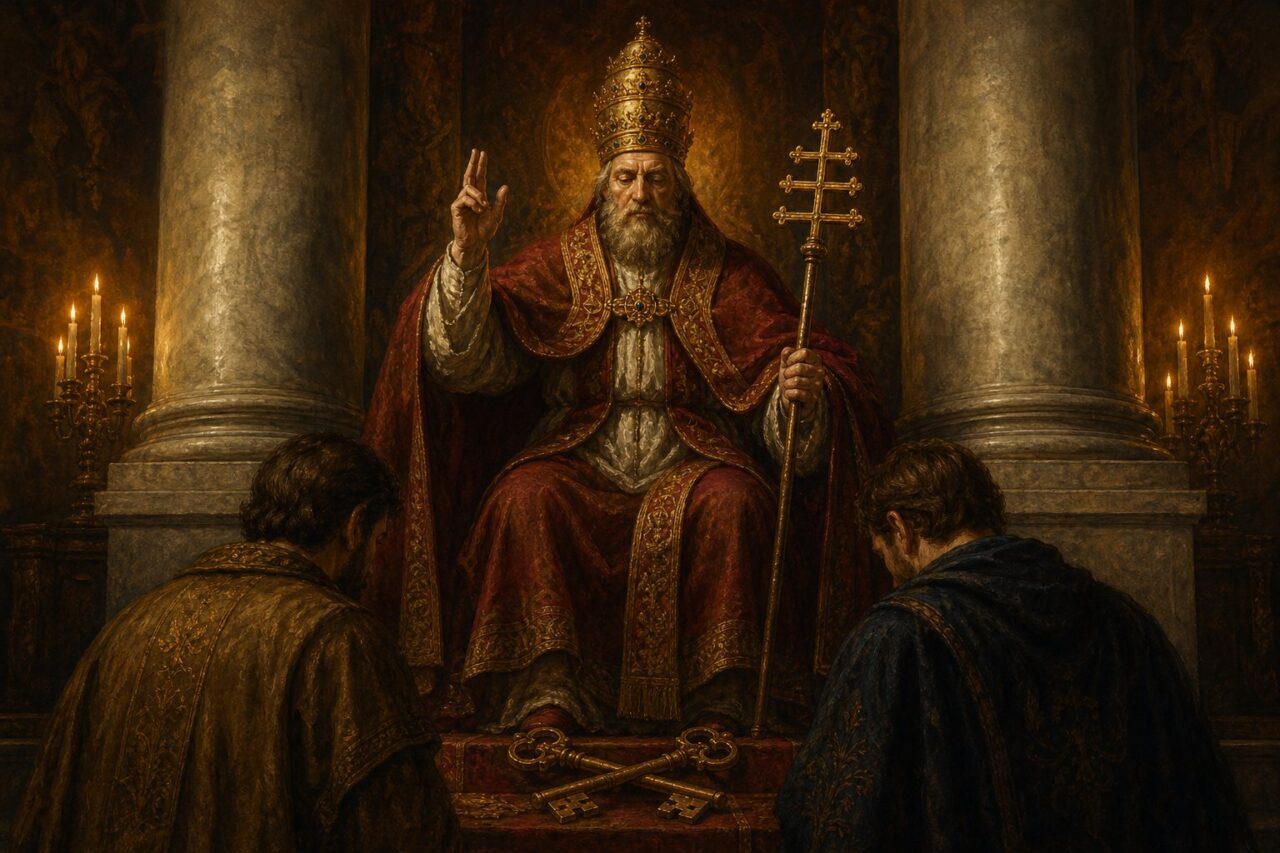
The Hierophant shows up when you are being asked to learn from something larger than your own private opinion. This card can point to a teacher, a spiritual guide, a school, a workplace culture, a family tradition, or a set of shared values that gives people a common language. It is Major Arcana number V, so its message tends to feel significant rather than casual. When it appears, you are usually dealing with commitment, structure, belonging, or the question of whose guidance you trust.
At its simplest, The Hierophant is the card of tradition, institutions, spiritual guidance, shared values, and learning. Upright, it often supports the choice to follow a proven path, seek wise counsel, formalize an agreement, or study with humility. Reversed, it asks whether a rule has become rigid dogma, whether you are outgrowing an old system, or whether questioning authority is necessary for your integrity. This is not a card that says all tradition is good or all rebellion is bad; it asks you to understand the system before deciding how to relate to it.
The Hierophant key facts
| Arcana | Major Arcana, card V |
|---|---|
| Element | Earth |
| Astrology | Taurus |
| Upright keywords | Tradition, institutions, spiritual guidance, shared values, learning |
| Reversed keywords | Rebellion, unconventional paths, rigid dogma, questioning authority |
| Yes or no | Yes |
What the Hierophant card shows
In the Rider-Waite-Smith image, a religious figure in red robes and a triple crown sits between two pillars. The red robes make his presence feel formal, visible, and active, suggesting that spiritual or moral authority is not hidden here; it is being presented openly. The two pillars frame him as someone who stands within an established structure, not outside it. They also make the scene feel ceremonial, as if the guidance being offered follows a recognized order.
He raises his right hand in blessing and holds a triple cross. These details emphasize layered authority, ritual, and teaching that has been passed through an organized channel. His raised right hand suggests approval, instruction, or a blessing given to those who come respectfully. The triple cross reinforces the sense that this card is not just about private belief, but about a system of meaning with levels, roles, and responsibilities.
At his feet lie two crossed keys, and before him kneel two followers. The keys suggest access: there is knowledge, initiation, or understanding available, but it may require the right approach. The crossed position hints that wisdom is not always opened by force; sometimes it opens through patience, study, and respect for process. The kneeling followers show the student side of the card, where humility and willingness to learn can matter as much as intelligence.
What the Hierophant means upright
Upright, The Hierophant often appears when the traditional route is the most supportive route. You may be applying to a university, joining a professional organization, attending religious services, meeting with a mentor, or choosing to make a relationship official. The card favors learning from people who have experience and from systems that have clear expectations. If you have been trying to invent every step from scratch, The Hierophant may gently ask why you are refusing help that already exists.
This card can also describe shared values. In real life, that may look like a couple discussing marriage, a family agreeing on caregiving responsibilities, or a team clarifying the standards everyone is expected to meet. The Hierophant does not ask you to become someone else to belong, but it does ask you to be honest about what you are joining. Before you say yes, make sure the group, teacher, partner, or institution reflects principles you can actually live with.
As spiritual guidance, The Hierophant is practical and grounded. It is less about a sudden flash of insight and more about showing up every week, reading the material, practicing the ritual, asking thoughtful questions, and letting wisdom mature. You may benefit from a counselor, elder, coach, advisor, or teacher who can help you sort through a situation without feeding drama. This card says there is value in discipline, especially when your emotions are loud and you need a steadier framework.
When the Hierophant appears reversed
Reversed, The Hierophant can show a healthy need to question authority. You may realize that a family rule, religious teaching, workplace policy, or social expectation no longer matches your lived truth. This is the card that asks, “Do I believe this, or have I only repeated it?” It can mark a period of unlearning, especially if you were rewarded for obedience but not encouraged to think for yourself.
The shadow side of the reversed card is rigid dogma. Sometimes the problem is not tradition itself, but the way someone uses tradition to control others, shut down questions, or protect their own status. You might be dealing with a boss who says, “That is how we have always done it,” even when the process is clearly failing. You might also notice your own rigidity, especially if you are judging people who choose a different path.
Reversed, The Hierophant can point toward unconventional paths that are still sincere. You may study outside a formal school, build a relationship that does not follow your family’s expectations, or create a spiritual practice that is meaningful without being approved by everyone around you. The advice is not to rebel for attention, but to choose consciously. If you leave a structure, build your own ethics strong enough to carry you.
The myth of blind obedience
The most common misunderstanding about The Hierophant is that it simply tells you to obey. In real readings, the card is more nuanced than that. It asks you to notice the systems shaping your choices, then decide whether those systems deserve your trust. Sometimes the wise move is to follow a tradition; sometimes the wise move is to understand it well enough to outgrow it responsibly.
For example, imagine a three-card reading with The Hierophant, Eight of Pentacles, and The Lovers. This could describe someone learning how to build a serious relationship through daily effort, not just attraction. The Hierophant would highlight shared values, the Eight of Pentacles would show practice and improvement, and The Lovers would bring the choice of commitment. The message would be practical: love grows stronger when both people are willing to learn the same language of respect.
The Hierophant in love and relationships
In a relationship: The Hierophant often brings up commitment, shared values, and the agreements that hold love together when everyday life gets real. You and your partner may be discussing marriage, family expectations, religious beliefs, living arrangements, or the kind of future you both consider honorable. This card supports honest conversations about what you each need in order to feel secure. It can be a very positive sign when both people want the same kind of commitment and are willing to act with maturity.
If you are single: The Hierophant suggests you may meet someone through a school, community, spiritual setting, professional circle, or family connection. It can also show that you are looking for a partner whose values are clear, not someone who keeps everything vague. You may be less interested in chemistry alone and more interested in character, consistency, and life direction. If dating has felt confusing, this card advises you to define your standards before you agree to another situation that does not fit them.
Reversed in love: Reversed, The Hierophant can show tension around commitment or pressure to follow a relationship script that does not suit you. One person may want tradition while the other wants more freedom, or outside voices may be influencing choices that should belong to the couple. It can also point to a bond that is unconventional but still genuine. The key question is whether your choices come from integrity or from fear of disappointing other people.
Career and money with the Hierophant
At work: The Hierophant is strong for training, credentials, mentorship, and working within established organizations. You may be learning company procedures, preparing for certification, joining a professional association, or receiving guidance from someone senior. This card favors respect for protocol, especially if you are new to a field and need to understand how decisions are made. It can also point to a workplace where culture and values matter as much as technical skill.
With money: The Hierophant encourages conservative, educated choices rather than impulsive moves. You may benefit from speaking with a qualified financial professional, reading the fine print, and following basic principles that support stability. This is general guidance, not a guarantee of any outcome, but the card leans toward structure, planning, and accountability. If you share finances with a partner or family member, clear agreements are especially important now.
Reversed: Reversed, this card can show frustration with bureaucracy, outdated workplace rules, or financial advice that does not fit your actual life. You may be tempted to reject every rule, but make sure you understand why a rule exists before you break it. In career matters, it can support freelancing, alternative education, or a nontraditional path if you have the discipline to manage yourself. With money, avoid risky decisions made only to prove that you are independent.
The Hierophant and your well-being
For energy and well-being, The Hierophant points to routine, support, and trusted guidance. You may feel better when your days have a steady rhythm: regular meals, consistent rest, gentle movement, and practices that calm your nervous system. This card can also suggest joining a class, support group, or structured wellness program if that helps you stay accountable. It is not a diagnosis, and it should not replace care from a qualified health professional.
Reversed, The Hierophant may show resistance to a routine that feels too strict or advice that feels impersonal. You might need a more flexible approach, but flexibility should not become neglect. If you are receiving guidance, ask questions and make sure you understand the reasoning behind it. Your well-being is supported when structure serves your body and spirit rather than making you feel trapped.
The Hierophant as feelings
As someone’s feelings for you, The Hierophant suggests they see you as serious, respectable, and connected to their deeper values. They may be thinking about commitment, long-term potential, or whether your lives would fit together in a stable way. Their feelings may not be wildly dramatic, but they can be sincere and rooted in wanting to do the right thing. If the card is reversed, they may feel drawn to you while also questioning expectations, labels, or outside approval.
The Hierophant in a yes or no reading
The Hierophant is a Yes card, especially when your question involves commitment, education, official agreements, mentorship, spiritual practice, or following a proven process. The yes is not reckless; it asks you to say yes with respect for the rules, responsibilities, and shared values involved. Reversed, the answer can still lean yes, but only if you are willing to question assumptions and avoid agreeing just to please an authority figure. In that position, the card says yes to integrity, not blind obedience.
For every card at a glance, see our yes or no tarot guide.
The Hierophant with other cards
- The Hierophant + The Lovers: This pairing often highlights a relationship choice shaped by values, vows, or family expectations. It can point to serious commitment if both people are choosing each other freely.
- The Hierophant + The Emperor: Together, these cards emphasize structure, rules, leadership, and established systems. The message may involve institutions, authority figures, or the need to work within a clear chain of responsibility.
- The Hierophant + The Hermit: The Hierophant seeks wisdom through shared teaching, while The Hermit seeks it through solitude. This combination asks you to balance trusted guidance with your own inner examination.
- The Hierophant + Three of Pentacles: This is excellent for apprenticeship, professional learning, teamwork, and building skill through feedback. It often favors mentors, classes, and collaborative standards.
- The Hierophant + Five of Swords: This combination can warn of conflict around beliefs, rules, or moral superiority. Be careful of arguments where someone wants to win more than they want to understand.
Practical advice when you draw the Hierophant
- Choose your teachers carefully. Seek guidance from someone whose life and behavior match the wisdom they offer. Respect experience, but do not confuse confidence with truth.
- Clarify shared values. Before committing to a person, group, job, or path, name the values you are agreeing to uphold. A shared language prevents confusion later.
- Respect the process. If you are learning something new, let yourself be a student. Mastery often comes from repeating basic steps until they become trustworthy.
- Question without contempt. If an old rule no longer fits, examine it honestly rather than reacting automatically. You can leave a system without losing your integrity.
The Hierophant: element and astrological links
The Hierophant is linked to the element of Earth and the astrological correspondence of Taurus. Earth gives this card its focus on structure, practice, tradition, and what can be lived day after day. Taurus adds steadiness, loyalty, patience, and a respect for values that prove themselves over time. At its best, this combination helps you build a life around beliefs that are not just spoken, but embodied through consistent choices.
Keep exploring: browse all tarot card meanings, check your daily horoscope for the astrological mood of the day, or see the key dates of the year in your 2027 horoscope.